







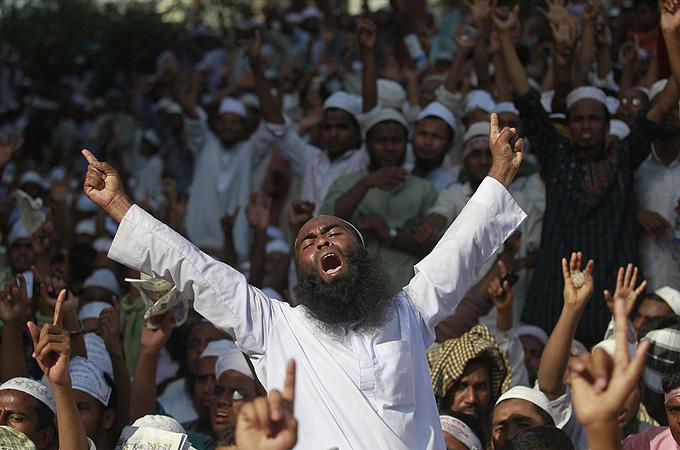
 In Bangladesh, Islam has never been merely a set of rituals. For millions, it is a moral compass, a language of compassion, justice, dignity, and restraint. It is learned first not from books, but from mothers’ prayers, fathers’ honesty, neighbors’ generosity, and the quiet certainty that faith should make a person kinder, not crueler. Yet today, a growing number of Bangladeshis find themselves asking a painful question: is the Islam practiced in public life the same Islam we dreamed of?
The Islam many people grew up with spoke of adl—justice—as a sacred obligation, of rahmah—mercy—as the heart of belief, and of human dignity as something God Himself honored. The Qur’an repeatedly insists that oppression is worse than violence, that arrogance is a spiritual disease, and that faith without ethics is hollow. In this Islam, women were moral agents, neighbors of other faiths were protected, and power was something to fear, not to worship. But the Islam increasingly visible in politics and public discourse often looks very different.
One of the deepest wounds comes from how Islam is misinterpreted and weaponized for political gain. Religious language, once meant to guide conscience, is now frequently used to control it. Complex theological traditions are flattened into slogans, and centuries of debate are replaced by loud certainties. Faith becomes less about accountability before God and more about loyalty to a group. When religion is turned into a political tool, disagreement is no longer intellectual—it becomes moral betrayal. Critics are not just wrong; they are branded as enemies of Islam itself.
This distortion is especially visible in the treatment of women. Islam, in its foundational texts, recognized women as individuals with moral, legal, and spiritual agency at a time when many societies did not. Yet in Bangladesh’s religious-political space, women are often spoken about as problems to manage rather than people to respect. Their mobility, work, leadership, and even presence in public life are framed as threats to morality. Protection becomes a euphemism for control, and modesty is selectively enforced on women while power and corruption among men go unquestioned.
Recent political debates have made this contradiction impossible to ignore. Statements and positions associated with Bangladesh Jamaat-e-Islami have reignited controversy over women’s leadership and participation in public life. The idea that women should not lead, should not occupy positions of authority, or should be confined to narrowly defined roles is often presented as “Islamic,” even when it clashes with historical realities and ethical principles within Islam itself. For many women—especially educated, working women—this rhetoric feels like erasure. It tells them that no matter how capable, sincere, or ethical they are, their gender disqualifies them.
What makes this more painful is the gap between religious claims and lived realities. Bangladeshi women work in factories, fields, offices, schools, and hospitals. They sustain families, educate children, and contribute directly to the economy. Yet religious-political narratives often reduce them to symbols—of honor, shame, or moral panic—rather than acknowledging them as full citizens. Islam is invoked not to protect their rights, but to justify their exclusion.
Another troubling dimension is how religion is used to police emotions and suppress dissent. Any criticism of religious actors or interpretations is quickly reframed as an “attack on Islam.” This tactic shuts down conversation and creates fear. People begin to self-censor, not because they reject Islam, but because they fear social or political backlash. Ironically, this environment harms Islam itself. When faith cannot be questioned, discussed, or debated, it becomes brittle. A religion that once encouraged reflection (tafakkur) and reasoning (aql) is reduced to unquestionable dogma.
The consequences extend beyond gender. Religious minorities in Bangladesh also experience the effects of this politicized faith. Islam historically recognized pluralism as a social reality, even providing protections for non-Muslims. Yet today, other religious communities are often portrayed as outsiders whose beliefs are tolerated at best and suspect at worst. Violence or discrimination against minorities is sometimes justified by claiming “hurt religious sentiments,” as if emotional offense outweighs human rights. This selective sensitivity—outrage over perceived insults but silence over real suffering—reveals how far the public use of religion has drifted from its ethical roots.
This is not a rejection of Islam by society; rather, it is a protest against its misuse. Many Bangladeshis remain deeply religious while simultaneously feeling alienated by religious politics. They pray, fast, give charity, and raise their children with Islamic values, yet they feel uncomfortable when Islam is invoked to justify injustice. For them, the problem is not faith—it is authority. Not belief—but coercion.
The Islam they dreamed of did not need intimidation to survive. It convinced through example, not enforcement. It did not fear women’s voices, because it trusted moral strength over social control. It did not collapse when questioned, because truth does not fear scrutiny. Most importantly, it did not belong to any political party.
What we are “getting” instead is an Islam filtered through power struggles, social anxiety, and patriarchal insecurity. It is louder, harsher, and more defensive. It speaks often of threats but rarely of responsibility. It demands obedience but resists accountability. And in doing so, it risks pushing younger generations away—not from Islam itself, but from those who claim to represent it.
The question, then, is not whether Bangladesh is becoming more or less Islamic. The real question is: which Islam will define the future? One that upholds justice even when it is inconvenient, or one that bends scripture to serve politics? One that recognizes women as moral equals, or one that confines them for the comfort of men? One that protects minorities as a religious duty, or one that exploits fear to consolidate power?
Islam, at its core, is not afraid of dignity, equality, or pluralism. These values are not foreign imports; they are deeply rooted in its moral vision. Reclaiming that Islam requires courage—not just to challenge political actors, but to resist the comfort of silence. The Islam many people dreamed of is still possible, but only if faith is rescued from those who use it as a weapon and returned to where it belongs: the conscience, not the campaign.
আপনার মতামত জানানঃ