







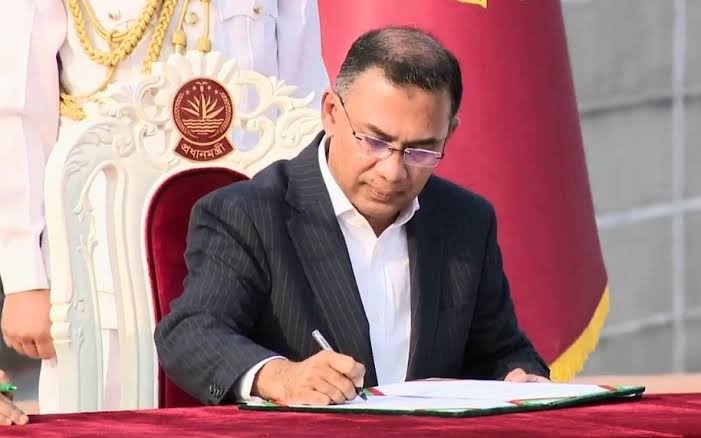
 Political journeys often reveal how individuals evolve with time, responsibility and experience. The life of Tareq Rahman presents such an evolution. When he appeared in the political arena as a young figure he was mostly known as the energetic heir of a powerful political family. If one compares that early phase with a later period when he stands at the pinnacle of leadership as prime minister the contrast highlights the transformation of personality style and political vision.
During his youth Tareq Rahman carried the image of a rising political figure shaped by legacy. He grew up in a household deeply involved in the country’s politics. His father Ziaur Rahman founded the Bangladesh Nationalist Party while his mother Khaleda Zia served multiple terms as prime minister. Because of that background his entry into politics seemed almost inevitable. In those early years his role was often defined by organization building and youth engagement. Supporters viewed him as a symbol of continuity while critics often described him as inexperienced.
The young Tareq Rahman appeared confident and energetic. His speeches frequently focused on mobilizing party workers and strengthening grassroots networks. He travelled widely within the country and he tried to connect with young supporters who saw him as a representative of a new generation. In those days his political image was closely linked with enthusiasm and ambition. He was seen attending party meetings coordinating organizational strategies and standing beside senior leaders during political rallies.
That youthful stage of his political life was also shaped by the realities of opposition politics. Bangladesh’s political landscape has long been competitive and confrontational. Young leaders often learn quickly that public visibility comes with both praise and criticism. For Tareq Rahman this meant navigating intense scrutiny from the media and opponents. Yet his supporters believed that such challenges helped him develop resilience and political awareness.
Years later the imagined picture of Tareq Rahman as prime minister would present a different image. Leadership at the national level demands a shift from activism to governance. The youthful energy that once defined his public persona would likely transform into a more measured and strategic approach. A prime minister must manage institutions handle diplomatic relations and guide national policies that affect millions of people. Such responsibilities often reshape how a leader speaks acts and is perceived.
As prime minister he would be expected to focus less on partisan mobilization and more on national priorities. Economic growth governance reforms and international cooperation would dominate the agenda. Decisions would need to balance political ideals with practical realities. In such a role a leader often becomes more cautious in public statements because every word can influence markets diplomacy and national confidence.
The difference between the young political organizer and the head of government would also appear in leadership style. Early in his career Tareq Rahman’s influence relied heavily on his position within the party structure. In the prime ministerial role authority would stem from the office itself. Instead of focusing only on party members he would have to address the expectations of the entire population including supporters critics and those who remain politically neutral.
Public perception would also evolve over time. When he was young many observers focused on his lineage and questioned how much of his influence came from family heritage. As prime minister the conversation would shift toward performance policy and national outcomes. Citizens would judge his leadership by economic stability social development and the country’s standing in the international community.
Another striking contrast would lie in communication style. Younger politicians often speak with strong partisan tones because their primary audience is their party base. A prime minister however must communicate with the entire nation. The tone becomes more inclusive and the message aims to build unity rather than mobilize confrontation. Speeches often emphasize national goals shared challenges and collective progress.
Time also changes the personal dimension of leadership. A young political figure often carries the optimism of possibility. Experience brings both maturity and caution. Years of political struggle negotiation and criticism can shape a leader’s understanding of power responsibility and compromise. The transition from youth to national leadership therefore represents not only a career progression but also a deeper transformation of outlook.
The comparison between these two phases reveals how leadership evolves with circumstances. Youthful ambition can ignite political momentum. Experience can transform that momentum into governance. In the early stage Tareq Rahman’s political identity was defined by energy organization and legacy. In the later stage as prime minister the defining qualities would likely be responsibility decision making and national vision.
Such transformations are not unique to one political figure. Throughout history many leaders have travelled similar paths. The early years of activism often prepare individuals for the complex responsibilities of governing. They learn how to navigate public expectations manage alliances and respond to crises. When they eventually assume the highest office they bring with them lessons shaped by decades of political engagement.
The imagined contrast between the young Tareq Rahman and the prime ministerial Tareq Rahman therefore reflects a broader narrative of political growth. It shows how time reshapes leaders how public roles redefine identity and how responsibility demands maturity. The energetic young organizer and the seasoned national leader may appear different on the surface yet both represent stages of a single evolving political journey.
আপনার মতামত জানানঃ